

Not everyone has room, budget or a gym nearby for a real sauna. The good news: you can get surprisingly close at home. Here are six sauna alternatives, compared honestly by cost, space and how much they actually feel like a sauna.
Short answer
A portable infrared sauna is the closest substitute: it gets you properly hot and sweating for roughly $150 to $400 and folds away after use. A sauna blanket is cheaper to store and works lying down, a hot bath costs nothing, and a steam shower or hot tub is the upgrade if you are renovating anyway. None of them matches a Finnish sauna at 175 °F exactly, but most give you the relaxing heat you are after.
As an Amazon Associate we earn from qualifying purchases.
The closest thing to a sauna for a small space: an infrared tent with a folding chair, heated foot pad and remote that folds away after use. Prefer to lie down? The Lifepro sauna blanket is the alternative.
Check price on Amazon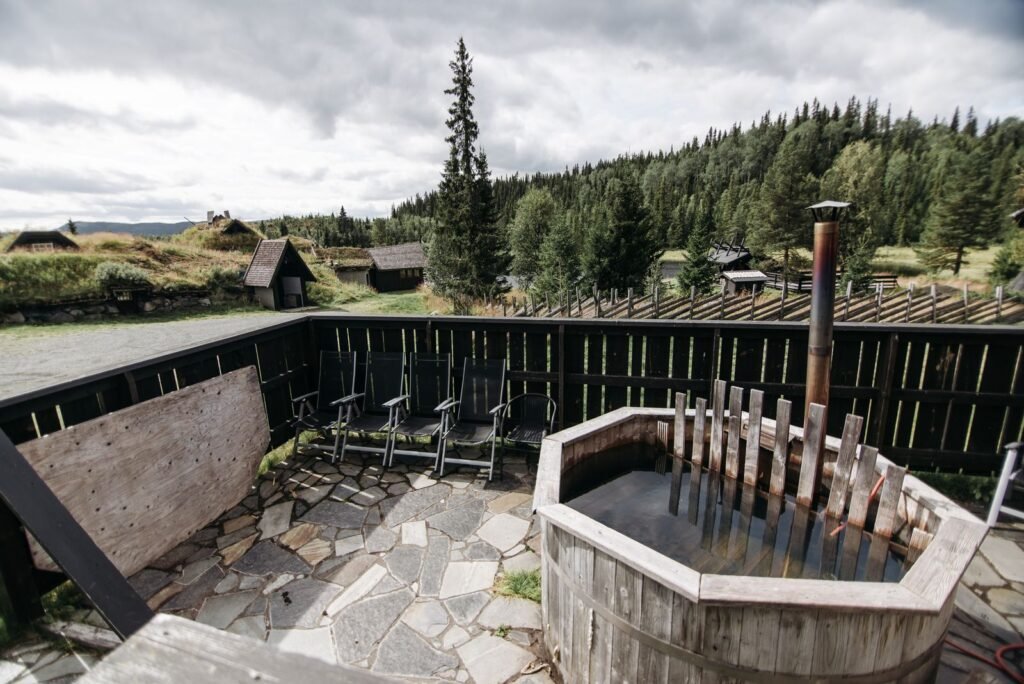
Sauna alternatives compared
| Alternative | Rough cost | Space | How sauna-like | Best for |
|---|---|---|---|---|
| Portable sauna | $150 to $400 | Folds away; needs a chair | High: full-body heat and a good sweat | Most people who want a home sauna feeling |
| Sauna blanket | $100 to $500 | Fits in a drawer | Medium to high: strong sweat, lying down | Small apartments |
| Steam shower | $1,000 to $4,000 plus installation | Your existing shower | High, if you like steam | Bathroom renovations |
| Hot tub | From about $3,000 | Patio or large room | Medium: hot water, max 104 °F | Social soaking |
| DIY bathroom steam | Free | Your bathroom | Low to medium | Trying the idea first |
| Hot bath | Free | Your bathtub | Medium: raises your body temperature | An evening wind-down |
What a sauna substitute needs to do
A sauna works by heating you up: your skin and core temperature rise, your heart beats faster, your blood vessels widen and you sweat. Any good alternative needs to do the same, safely, for 15 to 30 minutes. That is why a hot bath can count, while a heated room at 80 °F does not.
What you give up is the Finnish ritual: very hot air, water on the stones and cooling off between rounds. If that is what you love, see our guide to how long and how often to use a sauna for when you do get to one.
1. Portable sauna
The closest you will get without building a sauna. Most portable saunas are infrared tents: you sit on a folding chair inside, often with your head out, and carbon heater panels warm your body directly. The air inside usually reaches around 120 to 140 °F (50 to 60 °C), similar to an infrared sauna cabin.
They set up in a few minutes, run on a normal outlet and fold down for storage. The downsides: they are cramped, the fabric feels less special than wood, and cheap models heat unevenly. Our portable sauna guide covers what to look for.
2. Sauna blanket
A sauna blanket is a heated sleeping-bag-style wrap that you lie in for 30 to 45 minutes. It warms you with far-infrared heating elements and gets you sweating hard, which many people find very relaxing. It is the best pick if you have no space at all: rolled up, it fits in a cupboard.
You lie still instead of sitting upright, and you need to wipe it down after every use. Read more in are sauna blankets worth it?.
As an Amazon Associate we earn from qualifying purchases.
A one-person fold-up infrared sauna tent with a heated foot pad, folding chair and remote. The classic entry-level option if you want to sit upright like in a real sauna.
Check price on AmazonThe space-saving alternative: a far-infrared blanket with adjustable temperature and timer that rolls up after use. Good for small apartments and for people who prefer to lie down.
Check price on Amazon3. Steam shower

A steam shower is a sealed shower cubicle with a steam generator, usually installed during a bathroom renovation. It gives you a proper steam room at the push of a button, with the air around 110 to 115 °F and close to 100% humidity. Budget roughly $1,000 to $4,000 for the generator, plus the cost of a sealed enclosure and installation.
If you like the steam room at the gym, this is the most convincing home version. Keep sessions to 10 to 20 minutes, as in any steam room; see how long to stay in a steam room.
4. Hot tub
A hot tub gives you heat in water instead of air, and it is the most social option. The US Consumer Product Safety Commission recommends a maximum water temperature of 104 °F (40 °C), so it feels gentler than a sauna, but because water transfers heat so well, your body temperature still rises. Prices start around $3,000 and go far higher, and you need space, a strong outlet or wiring and regular water care.
5. Turn your bathroom into a steam room
The free version of a steam shower: close the door and window, put a towel along the gap under the door, and run a hot shower for a few minutes before you step in. It is humid and warm, but nowhere near as hot as a real steam room, and it is hard to control.
Afterwards, open the window or run the fan so moisture does not lead to mould. A few drops of eucalyptus on a damp cloth make it feel more like a spa; see our guide to the best oils for the steam room.
6. Hot bath
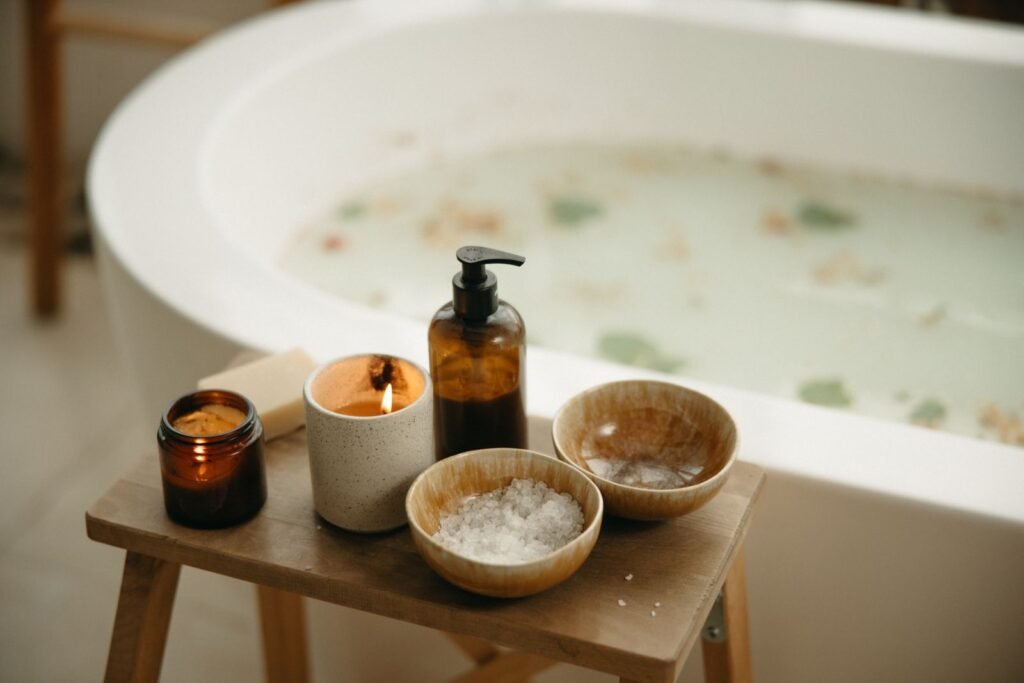
Do not underestimate the bathtub. Sitting in hot water raises your core temperature more than you might expect, and research backs it up: in a small 2016 study in The Journal of Physiology, eight weeks of regular hot-water immersion improved blood-vessel function and blood pressure in inactive adults, and a large Japanese study linked frequent tub bathing with a lower risk of heart disease and stroke. Neither proves cause and effect, but both suggest a hot bath is more than just a nice habit.
Keep the water comfortably hot rather than scalding, stay in 15 to 20 minutes, and get out slowly, because a drop in blood pressure can make you dizzy when you stand up.
Which sauna alternative should you choose?
- You want the real sauna feeling: portable sauna
- You have no space: sauna blanket
- You are renovating your bathroom: steam shower
- You want to soak with friends or family: hot tub
- You want to spend nothing: hot bath or a steamy bathroom
Safety tips for any heat session at home
- Drink water before and after, and skip alcohol.
- Follow the maker’s time limits for portable saunas and blankets, and never fall asleep in one.
- Stand up slowly afterwards; dizziness is the most common problem.
- If you are pregnant, have a heart condition or low or high blood pressure, check with your doctor first.
Sauna alternatives: FAQ
What is the cheapest sauna alternative?
A hot bath. It costs nothing extra and raises your body temperature if you keep the water around 100 to 104 F (38 to 40 C) for 10 to 20 minutes. Next cheapest is a sauna blanket, usually under $200.
What is the best sauna alternative for a small apartment?
A portable infrared sauna tent or a sauna blanket. Both plug into a normal outlet, need no plumbing and fold away. See do portable saunas really work for the trade-offs.
Is a steam room a good sauna alternative?
Yes, if you like humid heat. A steam room runs cooler (about 110 to 120 F) but at near 100 % humidity, so it feels intense. A steam shower brings that home if you are renovating a bathroom.
Is a hot tub as good as a sauna?
Not quite. A hot tub warms you through water at up to 104 F, while a sauna heats the air to 160 to 195 F. A hot tub is better for social soaking and sore muscles, a sauna for a deep sweat.
Can a sauna alternative give the same benefits?
Most research on sauna benefits comes from traditional Finnish saunas used regularly, so alternatives are not proven to match them. What they do reliably deliver is warmth, sweating and relaxation.
When is a real sauna worth it instead?
If you would use it three or more times a week for years. Use our sauna picker to find the right type and the sauna build cost calculator to estimate the budget.
Whichever sauna alternative you choose, keep sessions short at first and time them. Our free sauna timer runs heat and cool-down rounds on your phone.
Sources
- Brunt VE, et al. Passive heat therapy improves endothelial function, arterial stiffness and blood pressure in sedentary humans. J Physiol, 2016
- Ukai T, et al. Habitual tub bathing and risks of incident coronary heart disease and stroke. Heart, 2020
Editorial note: this guide is general information for healthy adults, not medical advice. If you have a health condition, are pregnant or take regular medication, check with your doctor before using a sauna.