

Short answer
Choose an electric sauna heater if you want to start the sauna with a switch or timer, install it indoors or in a small room, and keep maintenance low; most need a dedicated 240 V circuit wired by an electrician. Choose a wood-burning stove if you want the fire ritual, plentiful löyly or a sauna without power, and can accept a certified chimney, larger safety distances, firewood and regular sweeping. For most indoor home saunas electric is the practical choice; wood suits detached outdoor saunas and cabins.
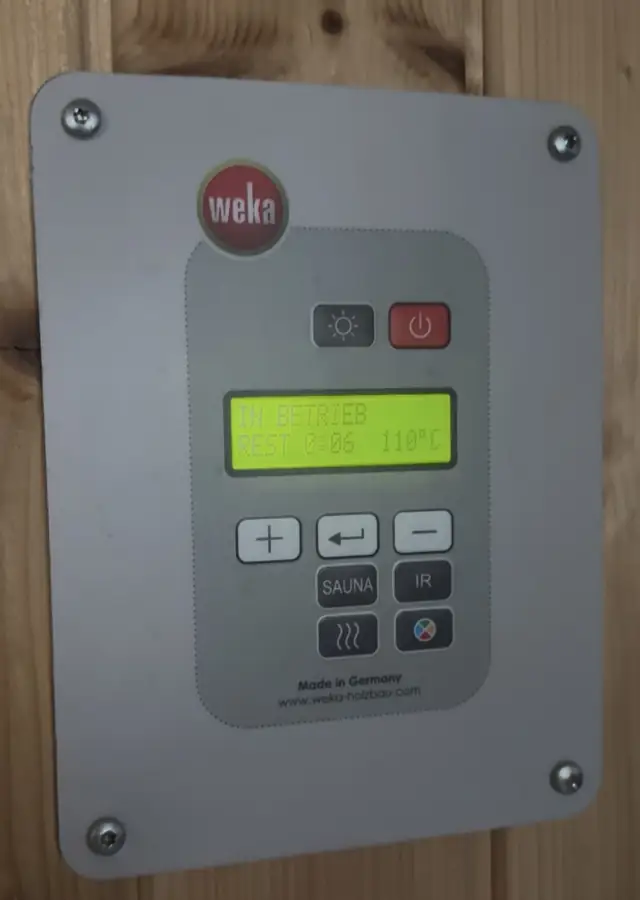
The heater is the heart of a sauna, and the first big decision is the fuel: a wood-burning stove or an electric heater. Both heat a pile of stones that warms the room and turns ladled water into löyly, the burst of steam that makes a sauna feel alive. But they ask very different things of the building, the budget and the owner. This guide compares them on the points that actually decide the choice: where the sauna will stand, how it is installed, what using it feels like day to day, and what it costs to run and maintain.
Wood vs electric at a glance
The table sums up what manufacturers and installers report. The figures are typical ranges from the sources at the end of this article, not our own measurements, and your heater manual always takes priority.
| Factor | Wood-burning stove | Electric heater |
|---|---|---|
| Heat-up time | About 20–60 minutes (Ehta) | About 20–30 minutes for standard heaters (Ehta); some US manuals state 45–60 minutes |
| Temperature control | By the amount of wood and the air damper | Thermostat, control unit, often a timer or app |
| Installation needs | Certified chimney (Harvia stoves require T600), non-combustible base, larger safety distances | Dedicated 240 V circuit sized to the heater, hard-wired by an electrician |
| Power supply | None needed for the heater | Required |
| Löyly | Large stone mass, takes plenty of water without cooling down | Depends on stone mass; large-stone electric heaters heat slowly |
| Ventilation | Firebox and flue draw air through the room | Needs a planned intake and exhaust |
| Maintenance | Ash removal, chimney sweeping, firewood storage | Rearrange or replace stones, occasional element check |
| Best fit | Detached outdoor saunas, cabins, off-grid sites | Indoor saunas, small rooms, frequent weeknight use |
If you only remember one thing: electric is about convenience and flexibility, wood is about atmosphere and independence from the grid. The rest of this guide explains the trade-offs behind each row.
Where the sauna stands: chimney, clearances and electrical service
The site usually makes the decision before taste does. A wood-burning stove needs a chimney, and not just any chimney. Harvia’s installation manual for its Cilindro wood stove requires a flue rated T600, a non-combustible base or floor with enough load-bearing capacity, and no electrical equipment, wiring or combustible material within the stated safety distances. For that model the minimums to combustible materials are 1,000 mm (about 39 in) above the stove, 500 mm in front, 200 mm behind and 150 mm at the sides. Other stoves have their own figures, so always use the numbers in your stove’s manual.
Those distances take up room. Ehta, a Finnish maker of garden saunas, notes that a wood-burning heater “always needs more space around it than an electric heater,” although a protective wall or fire protection board can reduce the distances. Finnish rules quoted by Ehta also set minimum distances between a wood-heated sauna building and other buildings and plot boundaries; local rules elsewhere differ, so check with your building department before you design around a stove. A stove in an attached or indoor sauna is possible but rarely practical, which is why many North American installers, such as Sauna Installer Pros, recommend electric for indoor and attached saunas.
An electric heater has no chimney and much smaller clearances, so it fits basements, spare rooms and small cabins, and some models can even sit partly within the bench structure. What it does need is power. Most home heaters are hard-wired to a dedicated 240 V circuit sized to the heater: HUUM’s Drop manual, as summarized by Plunge Lab, lists a 30 A breaker and 10 AWG wire for its 4.5 and 6 kW models and 40–50 A for larger ones, and says only a certified electrician may connect the heater. For a sauna at the far end of a property, the cost of running a heavy cable can be a real factor.
That makes the quick rule of thumb simple. No power at the site, or a detached cabin where a chimney is easy: wood is a strong option. Indoors, in a small room, or anywhere a chimney would be hard to build: electric. Use our sauna heater size calculator to get a first estimate of the output you need for your room volume, and plan sauna ventilation with either heater.
What using each heater is like
An electric sauna is quick to start. You turn a knob, press a button or set a timer, and the control unit holds the temperature you chose. Ehta gives 20–30 minutes for a standard electric heater to warm the sauna, and 1–1.5 hours for storage heaters that hold a larger mass of stones. Almost Heaven’s manual for its KIP heater, quoted by Plunge Lab, states that the sauna should reach at least 170 °F “in 45–60 minutes.” Real heat-up time depends on room size, insulation, outside temperature and heater output; our guide on how long a sauna takes to heat up covers these factors.
A wood-burning sauna is a ritual. You lay and light the fire, adjust the air damper and add wood as the room warms. Ehta says heating a wood-burning heater takes 20–60 minutes depending on the size of the sauna, the heater and the wood. iHKA, a Finnish sauna retailer, describes the difference well: an electric sauna is “a fifteen-minute decision,” while a wood-fired sauna is “an hour-long ritual.” Some people love that time outside while the stove crackles; others find it a barrier on a busy weeknight.
The steam is where many sauna lovers prefer wood. Ehta lists among the advantages of a wood-burning heater that it “easily delivers plenty of power,” heats a large quantity of stones in a reasonable time, and lets you throw plenty of löyly without the heater cooling down. Harvia notes that even its smallest wood-heated stoves are equal to a 13 kW electric heater in heating power. Electric heaters can give soft löyly too when they hold a large stone mass, but Ehta points out that such heaters are slower and more expensive to heat electrically.
Wood also changes the air. A burning firebox draws air through the room and out of the flue, which Ehta counts as good ventilation, while an electric sauna depends entirely on its designed intake and exhaust. On the other hand, wood brings bark and ash onto the floor, smoke outside the building and fine particle emissions, and you cannot set it to be hot when you get home. Temperature control is also less precise: you regulate heat with the amount of wood and the damper rather than a thermostat.
Costs, upkeep and safety over the years
Up-front costs vary too much by country, brand and site to give one honest number, so compare complete quotes. For wood, include the stove, stones, the certified chimney kit and roof penetration, floor protection, a heat shield if needed and any permit or inspection. For electric, include the heater, stones, the control unit and the electrician’s work for the dedicated circuit, which depends heavily on the distance from your electrical panel.
Running costs are closer than many people expect. Plunge Lab worked through US figures and found that bought firewood and grid electricity cost roughly the same per session. Its upper bound for electricity is simple arithmetic: a 6 kW heater running flat out for 1.5 hours uses at most 9 kWh, and an 8 kW heater at most 12 kWh, before the thermostat starts switching the elements off. Multiply by your own electricity rate to get a ceiling per session. Wood only becomes clearly cheaper when you have your own or very cheap firewood. Our guide to what a home sauna costs to run goes into electricity costs in more detail.
Maintenance is where the two differ most. A wood stove means emptying the ash box, storing dry firewood under cover and keeping the chimney clean. Harvia recommends checking the chimney and smoke pipe annually for soot and blockages and calling a professional sweep if creosote builds up; Ehta cites the Finnish rule of sweeping once a year for buildings used all year and every three years for part-time use. An electric heater mostly needs its stones rearranged or replaced and an occasional check of the elements.
Both heaters are a fire risk if installed or used badly. Ehta reminds readers that “a broken or faulty electric heater can cause a fire,” and Harvia warns that ignoring the stated safety distances creates a fire hazard. Follow the manual, keep combustible items away from the heater, and consider a heater guard so nobody touches the hot casing.
Checklist before you decide
- Is there 240 V power at the site, or would a long cable run be needed?
- Can a chimney with the required rating be installed safely, and do local rules allow a wood stove there?
- How often will you use the sauna: several weeknights or mainly weekends and holidays?
- Do you want a timer or app start, or is lighting a fire part of the appeal?
- Do you have a dry, covered place for firewood and time for ash removal and sweeping?
- Have you checked the heater manual for room volume, safety distances and ventilation?
Whichever heater you choose, two small accessories help: a guard around the heater so nobody brushes the hot casing, and a thermometer at bench height so you know the temperature you actually sit in. These are product examples from Amazon, not items we have tested.
As an Amazon Associate we earn from qualifying purchases.
A cedar two-sided guard for electric heaters on a wall or in a corner. Exterior about 24 × 15 × 14 in; interior about 22⅓ × 14⅛ × 14 in. Check that it suits your heater type; for a wood stove, use only the shields and guards listed in the stove manual. Confirm the opening still leaves your heater’s manual clearances.
Check price on AmazonA battery-free dial instrument for the sauna wall. The listing gives 0 to 120 °C (30 to 250 °F) at ±2 °C and 0 to 100 % relative humidity at ±5 %. Hang it near head height at the upper bench, away from the heater, to see the temperature you actually sit in with either heater type.
Check price on AmazonAs an Amazon Associate we earn from qualifying purchases.
If you want to see what each type of heater looks like as a product, these are two examples of the kind discussed in this guide. We have not tested them; always check the manual for room volume, clearances and the electrical or chimney requirements before buying.
A wall-mounted stainless-steel electric heater with built-in dial controls, sold with sauna stones. The 6 kW size is a common choice for small to mid-size home saunas; confirm the room volume range in the manual and have an electrician install the dedicated 240 V circuit.
Check price on AmazonAn outdoor wood-burning sauna stove sold with a chimney kit and a removable ash tray; the listing states a capacity of about 44 lb of sauna stones, which are not included. Check that the flue rating, clearances and base meet your local code and the stove manual before installing it.
Check price on AmazonFAQ
Is a wood-burning sauna better than an electric one?
Neither is better for everyone. Many Finnish sauna makers and enthusiasts prefer wood for its atmosphere and soft löyly, while electric wins on convenience, control and where it can be installed. Pick the heater that fits your site and how often you want to use the sauna.
Which heats up faster, wood or electric?
It depends more on the room and the heater than on the fuel. Ehta gives 20–60 minutes for a wood-burning heater and 20–30 minutes for a standard electric heater, while some US manuals state 45–60 minutes for an electric sauna to reach about 170 °F (77 °C). Plan on 30–60 minutes either way.
Can I put a wood-burning stove in an indoor sauna?
Sometimes, but it is rarely simple. You need a dedicated chimney with the temperature rating the stove manual requires (Harvia stoves call for T600), a non-combustible base, the full safety distances and usually a permit and inspection. In most houses an electric heater is far easier.
Is a wood sauna cheaper to run than an electric sauna?
Only if your firewood is cheap or free. An analysis by Plunge Lab found bought firewood and grid electricity cost roughly the same per session in the US, while the wood stove adds a chimney, sweeping and possibly insurance questions. Compare your own wood price and electricity rate.
Do I need an electrician for an electric sauna heater?
Yes for most home heaters. They are hard-wired to a dedicated 240 V circuit, and manufacturers such as HUUM state that only a certified electrician may connect the heater.
Sources
- Ehta. Wood-heated sauna vs. electric sauna? Choosing the heater for your garden sauna (2025; heat-up times, safety distances, sweeping intervals, pros and cons)
- Harvia. Cilindro 20 wood-burning sauna stove, installation and operating manual (PDF; T600 flue, safety distances, non-combustible base)
- Harvia. Tips for maintaining your wood-burning heater (annual chimney check)
- Harvia Support. Installing a wood-heated stove and an electric heater in the same sauna (heating power of wood stoves)
- Plunge Lab. Wood fired vs electric sauna: running cost and chimney (Almost Heaven KIP and HUUM manual figures, per-session cost)
- iHKA. Electric vs wood-fired sauna heater: which to choose
- Sauna Builders. Electric vs wood-burning sauna heaters
- Sauna Installer Pros. Wood-burning vs electric sauna: which heater is right for you? (indoor vs outdoor use, permits)
Editorial note: this guide compares published manufacturer manuals, installer guides and retailer information. We have not tested these heaters side by side, and the time and cost figures are the ranges those sources state. Your heater manual and local building, fire and electrical rules take priority. Checked on November 11, 2026.