

Short answer
Choose an indoor sauna if you want the easiest everyday use: it sits steps from a shower, is protected from weather and needs little exterior upkeep, but it takes up a room and needs ventilation and moisture protection. Choose an outdoor sauna if you would rather keep indoor space, want a backyard retreat or a cold plunge next to it, and can handle a level base, a longer power run and exterior maintenance. Never move an indoor-rated cabin outside unless its maker approves that model for outdoor use.
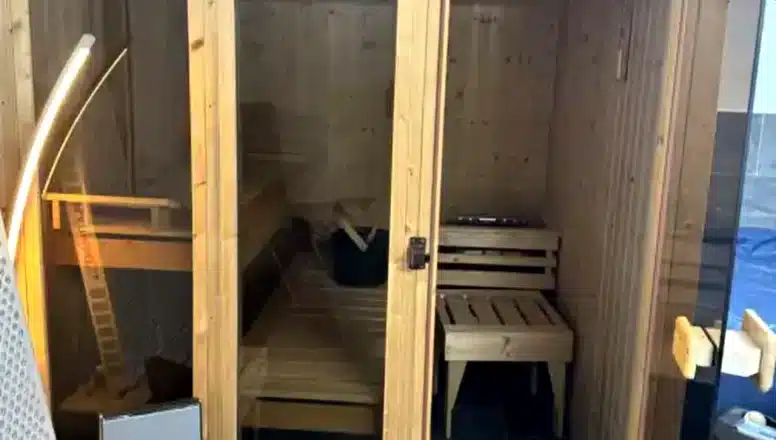
Once you decide you want a home sauna, the next question is where it goes. An indoor sauna becomes part of the house: a basement corner, a large bathroom, a home gym. An outdoor sauna is its own small building in the yard, often a barrel or a cabin. The heat inside can be the same. What changes is everything around it: how often you will really walk to it, what has to be built first, how the power gets there and how much upkeep you take on. This guide compares the two on those points, using manufacturer, installer and cost-guide information.
Indoor vs outdoor sauna at a glance
The table sums up what sauna makers, installers and cost guides report. The cost figures are national ranges from HomeGuide, not quotes, and your local prices, rules and the manual of your sauna take priority.
| Factor | Indoor sauna | Outdoor sauna |
|---|---|---|
| Everyday access | Steps from a shower and changing area, no weather on the way | Depends on the path, distance, lighting and weather |
| Space | Uses a room or part of one | Keeps indoor space free; needs a suitable yard spot |
| Base | Existing floor that tolerates heat and moisture (carpet not recommended) | Firm, level base such as concrete, pavers, compacted gravel or a deck built for the load |
| Power | Dedicated circuit; route may run through finished walls | Usually a longer run, often buried, with outdoor-rated parts |
| Weather protection | Provided by the house | Must be built into the roof, cladding and finish |
| Maintenance | Mostly interior cleaning and drying | Interior care plus roof, exterior wood, seals and drainage |
| Typical installed cost (HomeGuide) | Prefab room about $2,300–$10,500 | Prefab about $5,500–$14,500; custom about $12,000–$34,000 |
| Best fit | Frequent short sessions, small yards, cold or wet climates | Backyard retreat, larger groups, cold plunge or pool next to it |
If you only remember one thing: indoor is about convenience, outdoor is about space and atmosphere. Sauna & Steam Center, an installer, puts it the same way and notes that the better choice is usually the one your household will realistically use and maintain.
Convenience and how you will actually use it
The biggest difference is not the heat but the routine. An indoor sauna can sit next to a bathroom, a home gym or a bedroom, so a 15-minute session after work or before bed takes almost no planning. Sven’s Sauna Supply notes that indoor placement makes short weekday sessions easier because you never walk through rain, cold or wind, and the house already protects the cabin from the elements. Sauna & Steam Center adds that this convenience often matters more after the purchase than buyers expect.
An outdoor sauna separates the experience from the house. For many owners that is the point: the walk across the yard marks the start of a ritual, and the sauna can sit beside a patio, a pool, a garden shower or a cold plunge. Neptune Saunas, a maker of outdoor kits, lists views, natural light and easy ventilation among the main advantages, and many owners like the hot-cold contrast of stepping outside, and points out that an outdoor sauna does not heat up the house in summer.
The trade-off is the trip. In winter, in the rain or late at night, you need a safe, lit path and somewhere to change and cool down. If you picture yourself using the sauna several times a week, be honest about whether you will make that walk in January. If the sauna is mostly for weekends and guests, the walk matters much less.
Group size points the same way. A yard often has room for a bigger cabin with longer benches, while an indoor sauna is limited by the room you can give up. Privacy cuts both ways: indoors you are fully enclosed, while outdoors you may need to plan the door and window direction so neighbors are not looking in. Almost Heaven asks buyers of its barrel saunas exactly that question when they choose a site: what do you want to look at, and who will be looking at you?
Installation: floor or foundation, power and moisture
An indoor sauna starts with a suitable room. It needs a floor that tolerates heat and water, enough height, clearances around the heater and a ventilation plan. Almost Heaven says any flooring type works for an indoor barrel but carpet is not recommended. If you build a framed sauna room inside the house, the walls and ceiling need insulation and a vapor barrier so moisture stays out of the structure; Neptune Saunas lists that barrier as one of the extra tasks of an indoor build. Our guide on where to put a sauna in your home compares basements, garages and rooms near a bathroom in detail.
An outdoor sauna starts from the ground. Almost Heaven’s site advice is blunt: “not the bare earth.” Common bases are a concrete slab, flagstone, a wooden platform, brick pavers or compacted gravel, and the site has to be level or the staves and door will not line up. See our outdoor sauna foundation guide for base sizes and frost-line questions. The building itself must shed rain and snow, and a framed outdoor cabin needs insulation in the walls and ceiling; barrel saunas rely on thick solid staves instead, as our guide on outdoor sauna insulation explains.
Power is the other big item. Almost Heaven notes that an electric barrel heater needs a 220 V line from the breaker panel, hard-wired at the sauna, and that these lines are often buried when they cross the yard, subject to local code. HomeGuide puts a dedicated 220 V circuit at about $250 to $900 from an electrician; a longer run to the back of a yard usually costs more. Indoors the distance is often shorter, but the cable may have to pass through finished walls.
Finally, rules. Indoors you mainly deal with electrical work and, for a framed room, building rules. Outdoors, a sauna is also an accessory structure, so setbacks from property lines, HOA covenants and building permits can apply, and wiring for a sauna heater usually needs an electrical permit even where a small shed itself is exempt from a building permit. Our article on putting a sauna in your backyard walks through those checks.
Cost, weather and maintenance
Neither option is automatically cheaper. HomeGuide lists indoor prefab sauna rooms at about $2,300 to $10,500 installed and outdoor prefab saunas at about $5,500 to $14,500, with custom outdoor builds at about $12,000 to $34,000. Outdoor projects add a level base, a longer power run and sometimes leveling the yard, which HomeGuide puts at $300 to $1,000. It also states that indoor prefab saunas take about 2 to 4 hours to assemble, outdoor prefab saunas about 15 to 20 hours. An indoor project can catch up in cost if it needs demolition, new framing or wiring through finished rooms, so compare the full installed project, not the cabin price.
Weather mainly affects the outside of an outdoor sauna. Sun, rain, snow, freeze-thaw cycles, wind and coastal salt air wear on the roof, exterior finish, door seals and metal hardware. Sven’s Sauna Supply also notes that an outdoor cabin that sits cold between uses can take more energy to heat in a cold climate, while an indoor sauna starts inside a heated building. A well-insulated outdoor sauna that is properly sized can still be efficient, so the gap depends on your climate and how well the cabin is built.
Maintenance follows the same logic. Both need the same interior care: wiping and drying benches, keeping the floor dry, checking vents and the heater stones. An outdoor sauna adds periodic checks of the roof, exterior wood or stain, seals, fasteners and the drainage around the base. Neptune Saunas notes that outdoor saunas need exterior treating from time to time. None of this is hard, but it is extra work you take on for the life of the sauna.
One mistake shows up in almost every installer guide: putting an indoor cabin outside to save money. Indoor models usually lack a weatherproof roof, exterior finish and outdoor-rated electrical parts. HomeGuide warns that indoor infrared saunas cannot withstand cold temperatures or long-term sun, and a roof over a patio does not change that. Buy a model the maker approves for the place you plan to put it.
How to choose: a quick checklist
Run through these questions before you shop. If most answers point the same way, you have your answer.
- How often will you use it? Several short sessions a week favor indoor.
- Do you have a room you can give up, with a suitable floor, height and ventilation?
- Is there a level, well-drained spot in the yard that is easy to reach at night and in winter?
- How far is that spot from your electrical panel, and does your panel have capacity for a dedicated circuit?
- Do local rules, setbacks or your HOA limit structures in the yard?
- Do you want a cold plunge, pool or outdoor shower next to the sauna?
- Are you willing to maintain an exterior roof, finish and base every year?
- Can the delivery reach the spot? Check doors, stairs and turns indoors, gates and side yards outdoors.
- Have you compared the full installed cost, not just the cabin price?
Whichever you pick, a remote thermometer helps with an outdoor sauna (you can see from the house when it is hot), and both types benefit from oiled benches. These are product examples from Amazon, not items we have tested.
As an Amazon Associate we earn from qualifying purchases.
The display stays outside the hot room and only the probe goes in. The listing gives a probe range of -40 to 120 °C at ±1 °C, high and low alarms and a 7-day history in the Tuya or Smart Life app. For an outdoor sauna that means you can check from the house whether it is ready, if your Wi-Fi reaches the sauna. It does not measure humidity, and the panel is not waterproof, so keep it in a dry spot such as a changing area.
Check price on AmazonClear, odourless paraffin oil for benches and backrests, indoors or out. It soaks into the grain instead of forming a film. It is for the interior wood; follow your sauna maker’s instructions for the exterior finish.
Check price on AmazonAs an Amazon Associate we earn from qualifying purchases.
If you build a framed indoor sauna room:
A roll of pure aluminum foil vapor barrier for the walls and ceiling of a framed sauna room; the listing says one roll covers a sauna up to about 6 × 8 × 7 ft. It goes over the insulation, foil side facing the hot room, before the interior boards, and keeps steam out of the house structure. Follow your kit or heater manual for ventilation; we have not tested this product ourselves.
Check price on AmazonFAQ
Is an indoor or outdoor sauna better?
Neither is better for everyone. Indoor usually wins on convenience and low upkeep, outdoor on space, privacy and the backyard experience. The better choice is the one you will actually use several times a week and are willing to maintain.
Is an outdoor sauna more expensive than an indoor sauna?
Usually somewhat, but not always. HomeGuide lists indoor prefab sauna rooms at about $2,300 to $10,500 installed and outdoor prefab saunas at about $5,500 to $14,500, because an outdoor sauna adds a base and a longer electrical run. A big indoor renovation can close that gap, so compare the full installed project.
Can I put an indoor sauna outside?
Only if the manufacturer approves that model for outdoor use. Indoor cabins are not built with a weatherproof roof, exterior finish or outdoor-rated wiring, and an unapproved location can cause damage and void the warranty. A covered patio does not automatically make an indoor sauna suitable.
Does an outdoor sauna need a foundation?
It needs a firm, level base, not bare ground. Almost Heaven names concrete, flagstone, a wooden platform, pavers and compacted gravel as common bases for its barrel saunas, and warns that soft or eroding soil can tip a level sauna over time.
Does an indoor sauna need a vapor barrier?
A framed sauna room built inside a house does: insulation plus a vapor barrier keeps moisture out of the surrounding walls. HomeGuide notes that a prefab kit includes all materials for a freestanding sauna room, while a pre-cut kit needs framed and insulated walls, so follow your kit instructions. Either way, plan where warm, humid air goes after a session.
Sources
- HomeGuide. How much does a home sauna cost? (indoor and outdoor prefab and custom installed costs, yard leveling, 220 V circuit, assembly hours, indoor infrared saunas outdoors)
- Almost Heaven Saunas. How to prepare your barrel sauna site (not on bare earth, base options, level site, 220 V line, indoor flooring, privacy)
- Sauna & Steam Center. Outdoor vs indoor sauna: differences, pros, cons, cost and installation (2026; installer guide)
- Sven’s Sauna Supply. Indoor vs outdoor sauna considerations (2026; routine, weather, electrical service, operating cost, maintenance)
- Duchesne County, Utah. What buildings need a building permit (accessory structures, separate electrical permits)
- Neptune Saunas. Indoor vs outdoor sauna: which should you choose? (pros and cons, vapour barrier, exterior treatment)
Editorial note: this guide compares published manufacturer, installer and cost-guide information. We have not tested indoor and outdoor saunas side by side, and the cost figures are the national ranges HomeGuide states, not quotes. Your sauna manual and local building, zoning and electrical rules take priority. Checked on November 12, 2026.