

Short answer
A sauna backrest supports your back while you sit on the bench; a headrest only supports your head and neck. If you mostly sit against a flat wall, buy a backrest first; if you often lie down on a long bench, a headrest is the better first buy. Choose resin-free wood that stays cool to the touch, such as aspen, alder, abachi or cedar, with no exposed metal where your skin rests.
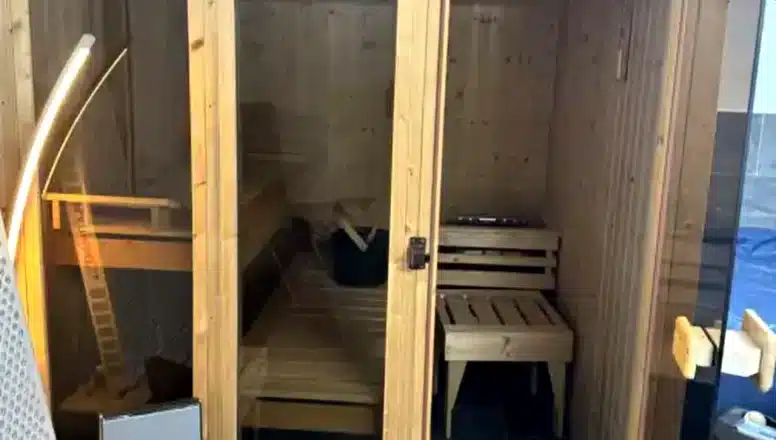
Many home saunas come with good benches but nothing to lean on except the wall boards. After ten minutes that gets uncomfortable, which is why a backrest or headrest is a common first add-on. The two names are often mixed up in shops, though, and buying the wrong one is a common mistake. This guide explains the difference, which wood to choose, how big a backrest should be and where it goes, and what to look for in a freestanding model if you cannot screw anything to the wall. For the full list of useful extras, see our guide to sauna accessories.
Backrest or headrest: which one you need
A backrest and a headrest do different jobs. A backrest is a tall panel of slats, fixed to the wall or standing on the bench, that holds your back away from the flat wall. The sauna guide Stove & Snow describes it as a curved panel roughly 19 to 21 inches (about 50 cm) tall that supports the lower back. A headrest is a short block or curved piece, usually well under 10 inches (25 cm), that supports only your head and neck.
That size difference tells you which to buy. If you mostly sit and have neither, start with the backrest. Sitting upright against bare vertical boards is what makes a session uncomfortable first, and a headrest alone does nothing for the rest of your back. If you already have a backrest and your head still falls back against the wall, or you like to lean your head back with your eyes closed, a headrest is the right second purchase.
If you lie down
On a long upper bench, many people prefer to lie down for part of the session. In that case a headrest is the more useful piece, because it works as a wooden pillow. Thermory, a maker of sauna wood, recommends an upper bench of around 600 mm deep, or 700 mm if you want to lie down comfortably, and a bench length of at least 2,000 mm to stretch out. If your bench is shorter or narrower, a backrest will get more use.
Built-in or freestanding
A built-in backrest is screwed to the wall above the upper bench and runs along its length. It is the neatest option, and Finnish bench guides recommend a backrest on the upper bench of any new sauna. A freestanding backrest stands on the bench and leans against the wall at an angle. It needs no tools, you can move it or take it out to dry, and it suits rented homes, barrel saunas with curved walls, and infrared cabins where you may not want to drill into the walls. Most 2-in-1 models sold online are freestanding and combine a backrest with a detachable headrest.
Whichever you choose, a backrest is about comfort. It does not change how hot the sauna is or what the sauna does for you, so there is no need to spend a lot if a simple one fits your bench.
Which wood is best for a sauna backrest
A backrest and a headrest touch bare skin for the whole session, usually on the upper bench where the air is hottest. That makes the choice of wood more important than for walls. Three properties matter: how much heat the wood passes into your skin, whether it releases resin when heated, and how stable it stays as the room swings between hot and dry and cool and damp.
| Wood | Feel against skin | Resin | Good to know |
|---|---|---|---|
| Aspen | Stays cool; one of the mildest woods to lean on | Resin-free | Light colour that greys over time; needs airflow to dry |
| Alder | Stays comfortable and warms evenly | Resin-free | Reddish tone; water-repellent and stable |
| Abachi | Among the coolest woods to touch | Resin-free | Soft, so edges dent; Harvia’s standard for benches and backrests |
| Western red cedar | Stays cool; low density | Low in pitch | Strong scent some people love and others avoid |
| Heat-treated aspen or pine | Comfortable | Treatment removes the resin | Darker colour; stable in changing humidity |
| Untreated pine or spruce | Feels hotter, warm spots around knots | Can bleed sticky resin | Fine for walls, less ideal for skin contact |
| Teak, oak and other hardwoods | Dense; holds and passes on more heat | Varies | Better for showers than for sauna backrests |
The Finnish bench builder Kevytremppa notes that wood surfaces you touch, including the backrest, should not get hotter than about 60 °C, and that aspen and alder pass heat slowly, while spruce and pine feel hotter. Heater maker Harvia makes the benches, headrests and backrests of its sauna interiors from abachi as standard and offers aspen, alder and heat-treated aspen as options. Thermory makes its ready-made backrests in aspen, alder and heat-treated aspen. Our guide to the best wood for a sauna compares these species in more detail.
As an Amazon Associate we earn from qualifying purchases.
A cedar backrest on its own:
A freestanding backrest without a headrest, for people who sit upright and want the cedar look from the table above. The S-shape follows the lower back; the non-slip pads keep it from sliding on the bench. Red cedar has a strong scent that some people love and others avoid.
Check price on AmazonHidden fixings and finish
Metal heats up far more than wood. Screws and nails in a sauna can get hot enough to burn, so a good backrest hides its fixings below the surface or covers them with wooden caps, as Thermory’s installation guide shows. Leave the wood bare or treat it only with a product made for saunas, such as paraffin oil. Ordinary varnish and lacquer can soften or blister in sauna heat.
Size, height and angle
How long
A built-in backrest should run the length of the upper bench. Ready-made backrests come in standard lengths: Thermory lists 1,550, 1,750, 2,050 and 2,350 mm, and its guide shows cutting the slatted panel to the bench length, as long as the end slats stay connected by a batten. Thermory plans around 600 mm of bench per person, so a 1,750 mm backrest suits two or three people sitting side by side.
How tall and at what height
Kevytremppa recommends a backrest on the upper bench, about 450 to 500 mm above the seat, tilted 10 to 15 degrees away from the wall. Ready-made panels from Thermory are 200 to 310 mm tall, so they are mounted at the height of your lower and middle back rather than reaching the full height. The gap between panel and wall lets air move behind it, so the wood can dry out between sessions.
The tilt matters more than it sounds. A backrest that is too upright feels like the wall; one that leans too far pushes you forward off the bench. Freestanding models solve this with adjustable lengths, and many 2-in-1 versions offer five settings so you can find a comfortable angle on your bench.
Check the bench depth before you buy
A freestanding backrest takes up part of the seat. Measure the depth of your upper bench and compare it with the depth of the backrest at the base. On a narrow bench, a slim wall-mounted backrest or a headrest that sits close to the wall may fit better. For a headrest, check that its height clears any built-in backrest you already have.
Price
At the time of writing, freestanding 2-in-1 backrests with a headrest listed at about $45 to $65 on Amazon, and a two-pack of handmade Finnish pine headrests from Northwood at about $120. Built-in backrests from sauna wood suppliers are priced per length and wood. We have not tested these products ourselves; the guidance here is based on the manufacturer information and the sources listed at the end.
As an Amazon Associate we earn from qualifying purchases.
A freestanding cedar backrest with a detachable headrest, five length settings and anti-slip pads. No screws in the wall, so it also works in rented or prefab cabins.
Check price on AmazonA short curved neck rest for people who already have a backrest. Two in a pack, so both people on the bench get one. Put a towel over it, as with any wood that touches skin.
Check price on AmazonHow to install and care for a backrest
Installing a wall-mounted backrest
- Measure the upper bench and cut the backrest panel to length if needed, keeping the end slats joined by a batten.
- Treat the wood before installation if the maker recommends it. Thermory advises treating all wooden parts with a wood preservative to protect them from moisture, and says this is easier to do before the backrest goes up.
- Mark the height so the panel sits at your lower and middle back when you sit on the upper bench, with the lower edge some distance above the seat.
- Fix the panel to the wall battens with the screws supplied and cover the screw heads with wooden caps, so no metal touches skin.
- Check that it is firm. Kevytremppa lists a loose or badly fixed backrest as a safety risk, because it can slide or fall.
Using a freestanding backrest
Stand it on the upper bench with the anti-slip feet fully on the boards, lean it against the wall and set the angle before you sit down. Check that it does not slide when you lean back. Keep it well away from the heater; it is wood, and like any wood it should never sit on or above the stove.
Towels and hygiene
Put a towel between your skin and the backrest or headrest, just as you sit on a towel. It keeps sweat off the wood, which is what makes benches and backrests darken and smell over time, and it makes slatted surfaces more comfortable. Our guide to sauna towel sizes explains which towel to use where.
Cleaning and drying
After the session, leave the door or vent open so the backrest can dry. A freestanding model can be taken out and stood up to dry completely. Wipe it now and then with a damp cloth and mild soap, and lightly sand dark sweat marks if they build up. Avoid strong chemicals and pressure washers, which roughen the surface. Our guide to cleaning a sauna covers benches and backrests step by step.
Frequently asked questions
What is the difference between a sauna backrest and a headrest?
A backrest is a tall panel that supports your back while you sit and keeps you off the flat wall. A headrest is a small curved piece that supports only your head and neck, either when you lean back or when you lie on the bench.
Do I need a sauna backrest or a headrest first?
If you mostly sit, buy a backrest first, because sitting against bare vertical boards is what gets uncomfortable. If you often lie down on a long bench, start with a headrest. Add the other one later if you still miss support.
What is the best wood for a sauna backrest?
Resin-free woods that stay cool to the touch, such as aspen, alder, abachi and western red cedar, or heat-treated wood. Untreated pine and spruce can feel hotter and bleed resin, and dense hardwoods hold too much heat.
How high should a sauna backrest be?
Finnish bench guidance puts the backrest on the upper bench, about 450 to 500 mm above the seat, tilted 10 to 15 degrees from the wall. Ready-made panels are usually 200 to 310 mm tall and run the length of the bench.
Can I use a backrest in an infrared sauna?
Yes. Freestanding backrests stand on the bench without screws, so they work in infrared cabins, barrel saunas and rented homes. Check the bench depth first, because the backrest takes up part of the seat.
Sources
- Kevytremppa. Sauna bench solutions: ergonomics, safety and use of space (backrest height and angle, 60 °C surface limit, wood species)
- Thermory. Sauna Design: The Ultimate Guide (bench length per person, bench depth for lying down)
- Thermory. Sauna materials product catalogue 2026 (backrest sizes and wood species)
- Thermory USA. Installation guide: Sauna Backrests
- Harvia. Sauna brochure 2021 (benches, headrests and backrests in abachi as standard; aspen, alder and heat-treated aspen options)
- Wooden Sauna Equipment. Wooden Sauna Headrest (wood species, resin and finish)
- Stove & Snow. Best Sauna Headrests (headrest vs backrest sizes)
- Drako-Myxx 2-in-1 Sauna Backrest (product information)
Editorial note: this guide is general information about comfort accessories. We have not tested sauna backrests or headrests ourselves; the guidance is based on the sources above and on manufacturer instructions. Checked on November 1, 2026.