

Short answer: Yes, a used sauna can work well in a basement. We bought a second-hand cabin, cut it down to fit our room and kept the original electric heater. What made the difference was not the sauna itself but the room around it: a shower right next to it, a place to lie down, filtered water for drinking and for löyly, and a simple 15-minute sand timer on the wall.
Most sauna articles online are written by people who have never sat in the sauna they describe. This one is different. This is the sauna in our own basement in Switzerland, the one we actually use. Below is how we set it up, what we learned, and what to check if you are thinking about a used sauna for your own home.
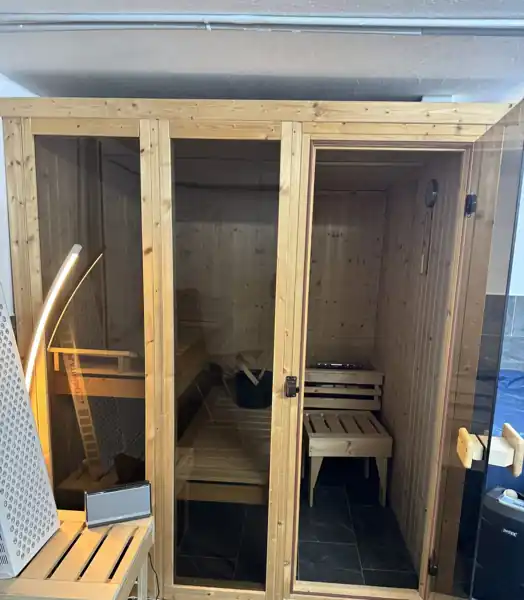
Our setup at a glance
| Part | What we use |
|---|---|
| Sauna cabin | Second-hand wooden cabin with glass front, cut down to fit the basement |
| Heater | The original electric stove with stones, kept when we made the cabin smaller |
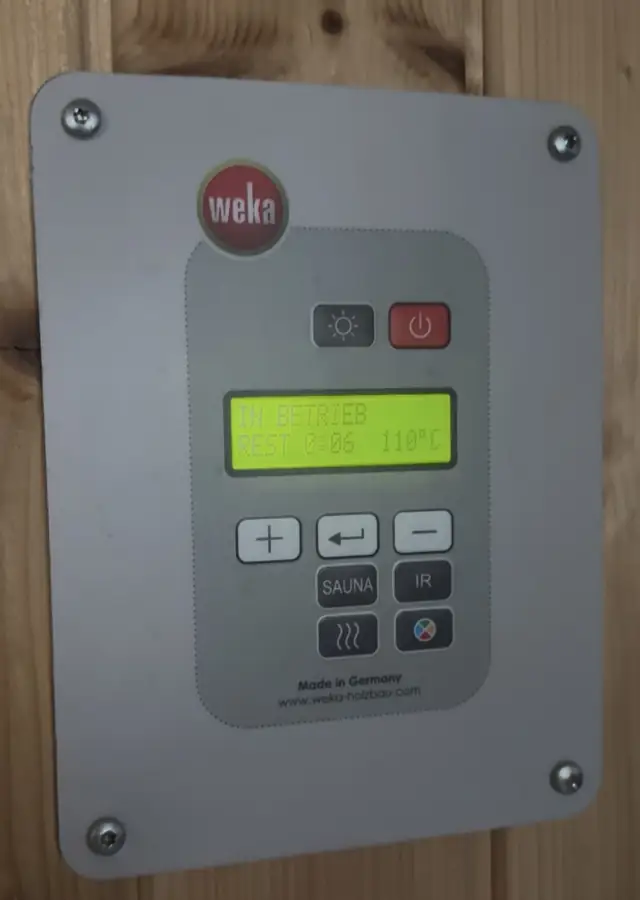
| Control | WEKA wall control outside the cabin (sauna and IR modes) |
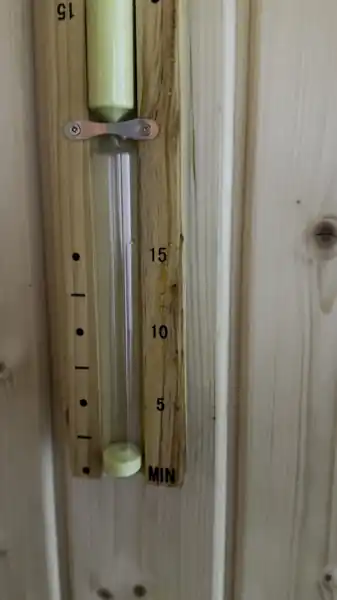
| Timer | Classic 15-minute sand timer on the wall inside |
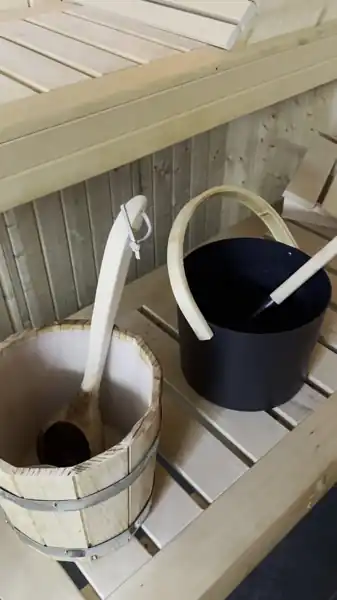
| Löyly | Ladle plus a wooden and a metal bucket. We prefer metal: safer and much less mold |
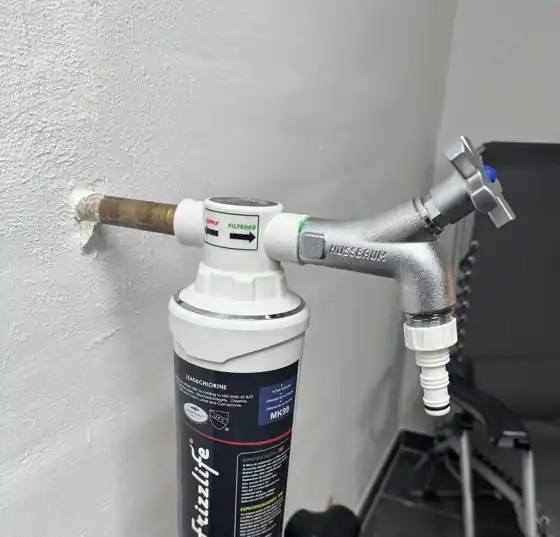
| Water | Filter on the tap, so drinking water and löyly water are both filtered |
| Room walls | Tiles high up the walls, waterproof and resistant paint above, because a basement sauna room gets steam and splashes |
| Cool-down | Shower right next to the sauna |
| Rest | Lounger and massage table in the same room, plus an inflatable hot tub |
Why we bought a used sauna
A new cabin of good quality is expensive, and a basement rarely has the exact size a catalogue sauna expects. A used sauna gave us solid wood, a proper heater and a glass front for a fraction of the price. The catch: it was bigger than our space. So we shortened it.
If you look at used saunas, check three things before you buy: the condition of the wood near the heater (dark, brittle or cracked boards are a warning sign), whether the heater and control come with it and still work, and how the panels are joined. Panel saunas can usually be taken apart and rebuilt; a sauna that was built into a room often cannot.
Cutting it down: the heater question
When you make a sauna smaller and keep the same stove, the stove is now strong for the room. Ours is. Be honest with yourself here: every heater has a minimum and maximum room volume in its manual, and a heater that is too big for the cabin can make the air very hot and very dry. The clearances matter just as much. The label on the side of our heater says it plainly: keep at least 110 cm vertically to the sauna ceiling and 7 cm horizontally to the walls or benches, because covering the heater or packing it too tight is a fire risk. Your heater will have its own label with its own numbers. Before you shrink a sauna, read that label and the manual, measure, and let a qualified electrician look at the connection.
To see where your cabin sits, use our sauna heater size calculator. Enter the inside dimensions and add glass as an extra allowance, because a glass front loses heat faster than a wooden wall.
The control: simple beats clever
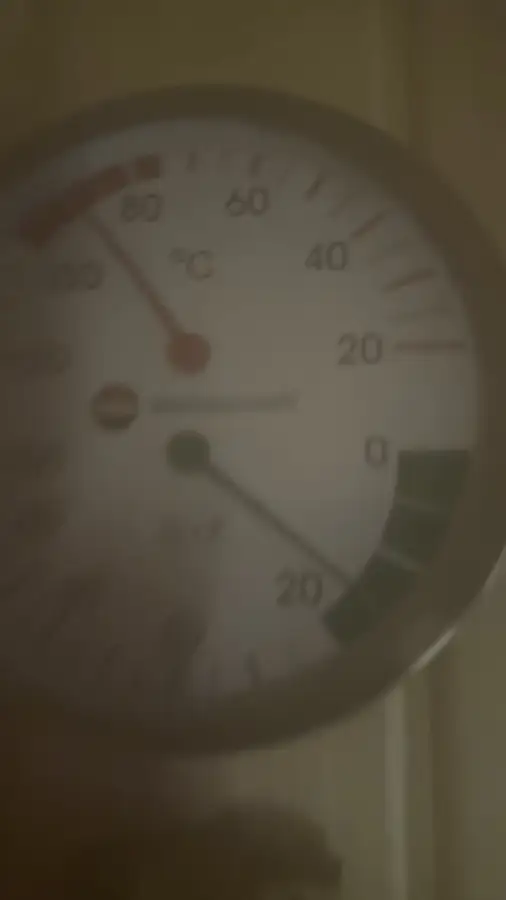
The cabin came with a WEKA wall control, part of WEKA’s modular sauna system, made in Germany. It sits outside the sauna, has a clear display and separate modes for sauna and IR. The control box behind it runs on 400 V and is rated for a heater of up to 9,000 W plus 300 W of light. That is the limit of the control, not the size of our heater, so if you buy a used sauna, check both labels: the control has to be rated for at least the heater you connect. A control outside the cabin is a small thing that matters: you can switch on, check the temperature and switch off without opening the door. Our real numbers: fully heated, the control display shows 110 °C. At the same time the dial thermometer on the cabin wall shows about 90 °C, and its hygrometer around 15 % relative humidity before any löyly. The difference is normal: the control’s sensor sits high up close to the heater, the hottest spot in the cabin, while the wall thermometer is closer to where you actually sit. If you only have the control display, assume the air at your bench is quite a bit cooler than the number you read. More on that in what is a good sauna temperature.
The 15-minute sand timer
No phone in the sauna. Instead, a sand timer on the wall that runs for 15 minutes. You turn it when you sit down, and when it runs out you go and cool down. For beginners we suggest 8 to 12 minutes and getting out earlier if you feel uncomfortable, so the timer is the upper limit, not the goal. More on timing in how long and how often to use a sauna.
Löyly with filtered water
We pour with a ladle from a sauna bucket. We have a classic wooden bucket and a black metal one, and our clear preference is metal: it does not soak up water, it dries quickly, it does not crack or start leaking when it dries out, and it gives mold much less chance. A wooden bucket looks traditional, but it has to be emptied and dried after every session. One thing we do that most guides skip: the water for löyly comes from a filter on the tap, the same filtered water we drink. It is simply nicer to breathe the steam of water you would also drink, and a carbon filter like ours takes out chlorine taste and smell. Be aware that it does not soften hard water, so the stones still collect lime over time and need rinsing or replacing now and then. If you add scent, use a few drops of a sauna-specific aroma in the bucket, never pure essential oil directly on the stones.
The room around the sauna matters more than the sauna
If we had to start again, we would plan the room first. A sauna session is heat, cool-down, rest, repeat. In our basement each step is a few steps away: the shower for cooling down, a lounger and a massage table to rest, and an inflatable hot tub. That short flow makes it easy to do two or three proper rounds. See our guide to the sauna and cold plunge routine if you want to add a colder option.
Three basement-specific points: ventilation, moisture and the walls. A basement sauna needs an air inlet low near the heater and an outlet on the far side, and the room needs to dry out after every session. The walls around the sauna take steam, splashes from the shower and wet towels, so normal interior paint is not enough. We tiled the walls high up and used a special waterproof, resistant paint above the tiles. That paint was noticeably more expensive than normal wall paint, so put it in your budget from the start. Tiles are easy to wipe dry, and the paint above them keeps moisture from getting into the wall. Read how to vent a sauna and how to prevent mold before you build.
Tips if you plan a basement sauna
- Plan the cables: power for the sauna, lights and extras should run in a proper channel, not across the floor.
- Measure the heater against the new, smaller volume before cutting, not after.
- Keep the path from sauna to shower short and non-slip.
FAQ: basement sauna with a used cabin
Is it a good idea to buy a used sauna?
It can be, if the wood near the heater is sound, the heater and control work and come with it, and the cabin can be taken apart. Budget for an electrician to connect it.
Can you make a sauna smaller?
Panel saunas can often be shortened, as we did. The key check is the heater: it must still be within the room volume and clearances stated in its manual.
Can I keep the original heater in a smaller sauna?
Only if the new volume is still inside the heater’s approved range. A stove that is too strong heats fast but can make the cabin too hot and dry. Check the manual and use a heater size calculator.
Should you use filtered water for löyly?
It is not required. We use filtered water because it is the same water we drink and it has no chlorine smell. A carbon filter does not remove lime, so soft water is what reduces deposits on the stones.
What does a basement sauna need besides the cabin?
A proper electrical connection, ventilation, a way to cool down (a shower is enough), a place to rest and a room that can dry out after each session.
Written by Arnold, owner of SaunaHelper, about his own basement sauna. All photos are from our own setup. Have a question about it? Leave a comment below.